How to Spend Less Time on Social Media: A Website Marketing Strategy for Service Providers
I have an image on my phone background (ironically!) that says: "Less time consuming, more time creating."
And it's something I've been sitting with lately.
Because I've noticed something: when I create before I consume—when I have space from the scroll and all the noise—I create much better work.
Work that's more me, not some version of the latest viral hack I've absorbed.
But so much of my time goes into consuming. Scrolling (sometimes mindlessly), absorbing content from others, trying to keep up with the algorithm.
And it's eating into the space I need to actually create.
So a couple of weeks ago, I did something a bit geeky. I went digging through my website analytics to see where my traffic is actually coming from.
And I discovered something rather surprising.
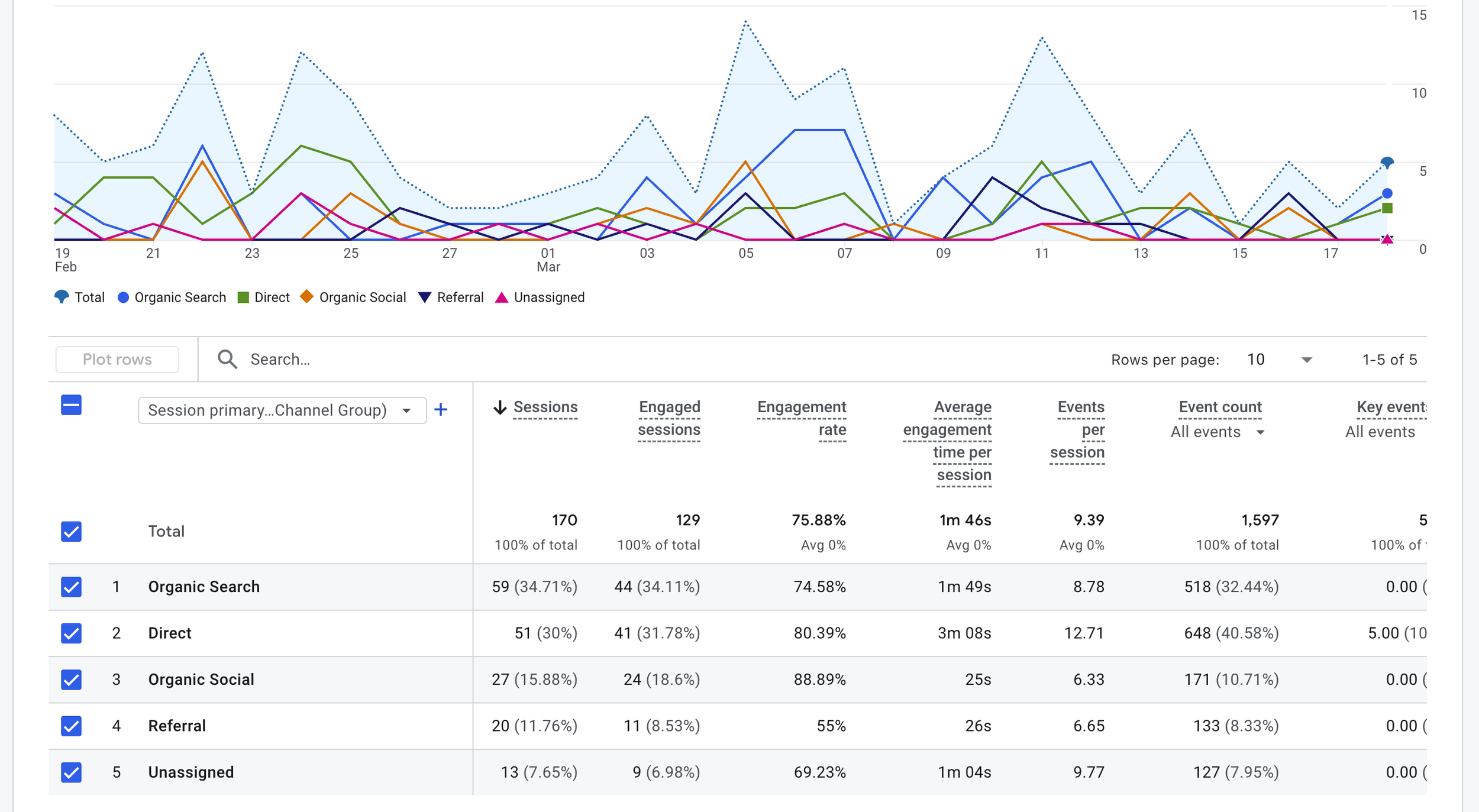
The analytics that changed my perspective
Organic search (aka people finding me via Google is) bringing in TWICE as much traffic as social media.
Double.
Which would be fine, except for one small problem: I spend about 1% of my marketing time on SEO and my website content, and 80% on Instagram.
The maths isn't mathing RIGHT NOW.
Here's what really struck me when I dug deeper: the people finding me through search aren't just browsing. They're spending more time on my site, and typically, they're ready to buy.
They've Googled something specific—"brand designer for wellness coaches" or "Squarespace website designer Devon"—they land on my site, have a look around, and book a call.
They're further along in their decision-making process. They know what they need. They're actively looking for someone to help them.
Whereas social media... I post a beautiful carousel, maybe get some lovely comments and engagement, feel like I'm showing up and doing the right thing, but I don't always know if any of that is translating into actual enquiries.
It's really easy to feel like you're shouting into the void on Instagram. Spending hours designing graphics or filming reels without ever knowing if it's actually doing anything for your business.
And here's the thing that's been sitting with me:
I built this business because I wanted freedom and flexibility.
I wanted to work in a way that felt good. That gave me balance. That didn't require me to be "on" all the time.
Yet somehow I've ended up on the social media hamster wheel—constantly creating, posting, showing up—because I thought that's what I should be doing.
Meanwhile, a quick blog post I wrote six months ago to help a client is still bringing people to my website every single week.
A service page I optimised once is ranking in Google and converting visitors into clients.
I put the work in once, and it keeps working for me. For months. Sometimes years.
That's less time consuming, more time creating.
That's the kind of marketing I actually want to be doing in 2026.
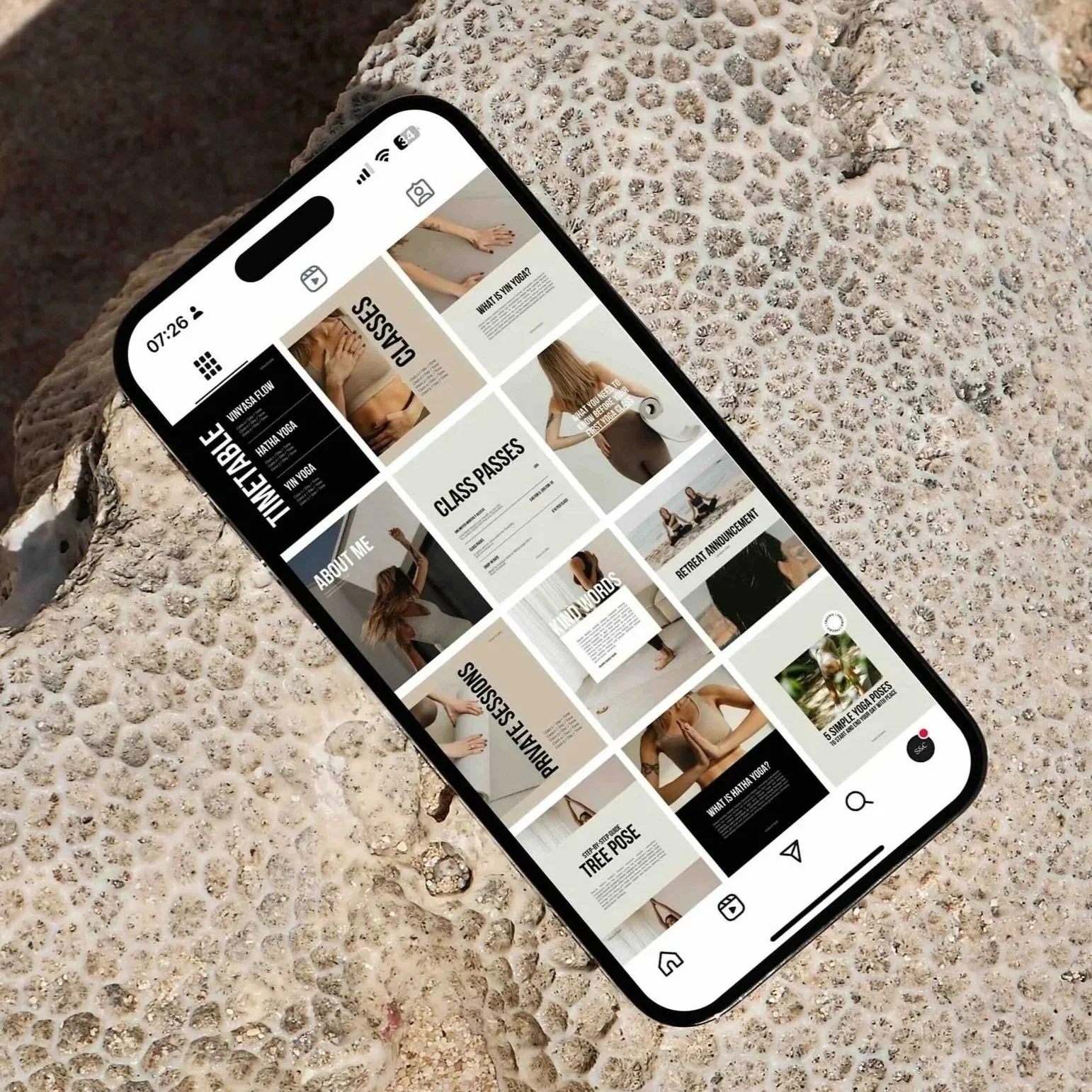
Social media vs. website marketing: what's the difference?
Don't get me wrong, I'm not saying social media doesn't work or that we should all abandon it.
But I am saying: what if we're spending 80% of our energy on the thing that gives us 40% of the results, whilst ignoring the thing that's quietly bringing in 60%?
What if there's a quieter, steadier way to bring people in that doesn't require constant content creation just to stay visible?
What if your website could be doing more of the heavy lifting?
Here's how I see the difference:
Social media marketing:
Requires constant content creation to stay relevant
Algorithm changes can tank your reach overnight
Hard to track what actually leads to bookings/sales
Content has a shorter lifespan
Can feel exhausting and never-ending
You're consuming a lot of other people's content to know what to create
Website + SEO marketing:
Create once, it works for months or years
You own it! No algorithm can take it away
You can track exactly where your traffic comes from
Compounds over time (the longer it's there, the better it performs)
Feels more sustainable and less draining
You create from your own expertise and experience
What I'm changing in 2026
I'm not abandoning social media entirely. I still show up there because it's where a lot of my community is, and I do enjoy the connection side of it.
But I am shifting my focus a little.
Instead of spending hours crafting the perfect carousel or stressing about posting consistently, I'm going to:
Write more blog posts that answer the questions my ideal clients are Googling. Not because I've seen someone else write about it, but because I genuinely have experience and insight to share. Quick, helpful posts that serve a specific purpose—like that blog post I wrote to help a client that's still bringing in traffic months later.
Optimise my service pages so they rank better in search and convert visitors into enquiries. Clear, helpful information that actually serves the people looking for what I offer.
Create helpful resources that live on my website and keep working long-term. Guides, workbooks, and tools that provide real value and keep bringing people back.
Focus on marketing that compounds rather than content that disappears in 24 hours. Work I create once that continues to bring in traffic and enquiries for months or years to come.
Because our time is precious.
And I want to spend it on marketing that actually moves my business forward, not marketing that just makes me feel busy.
I want less time consuming, more time creating.
Could your website be working harder for you?
If you're feeling stuck on the social media hamster wheel, or you're curious about whether your website could be bringing in more enquiries without you having to post every day, here are a few ways to get started:
Quick win: Make sure your homepage clearly states what you do, who you help, and what the desired outcome is.
Use this formula: (Thing you do) for (people you help) who (desired outcome)
For example:
"Soothing yin yoga for busy women who want to find a deeper sense of calm"
This helps both humans and Google understand what you offer.
Slightly bigger win: Write one blog post answering a question your ideal client is Googling.
Don't overthink it—just answer it thoroughly and naturally. Think about the questions you get asked all the time, or the things people seem confused about before they work with you.
I wrote a quick blog post to help a client understand something, and it's still bringing people to my website months later. It doesn't have to be perfect or lengthy—it just needs to be helpful.
Even better: Look at your website analytics (Google Analytics or your website platform's built-in stats) and see where your traffic is actually coming from.
You might be surprised, like I was, to discover you're already getting organic search traffic—you just haven't been paying attention to it or nurturing it. You might find you're spending all your energy on the channel that's bringing in less, whilst ignoring the one that's quietly working for you.
Want help figuring out your strategy?
I'm offering free 30-minute website clarity calls where we can look at your current setup and talk through how your website could be working harder for your business. No pitch, no pressure - just a conversation about what's possible.
Here's to less time consuming, more time creating. (And to marketing that works while we sleep!)
Some other bits and blogs you might like:
Boosting Website Traffic Made Easy: 5 Simple Tricks You'll Love
FREE Website Planning Workbook → Download now
Quick note on terminology: "Organic search" or "SEO" (search engine optimisation) just means people finding your website through search engines like Google—as opposed to paid ads. It's all the content on your website (blogs, service pages, your homepage) that helps Google understand what you do and who you help. The brilliant thing? Once it's set up well, it just keeps working without you having to tend to it constantly.